Menopause
Menopause belly: why it happens, and what actually works
The jeans that fit in your early forties stop fitting at the waist, even though the scale has barely moved. That is not your imagination, and it is not a willpower problem. Menopause changes where your body stores fat. The good news is that the research is clear about what moves it back.

Why the belly, and why now
Perimenopause usually starts in your mid-to-late forties and lasts about four years; the average age of menopause in the US is 52.
Three things happen at once during the menopause transition, and together they explain the menopause belly.
- Fat gain speeds up. The SWAN study followed 1,246 women through menopause. During the transition, the rate of fat gain roughly doubled, from about 1% a year to 1.7% a year. It started about two years before the final period and levelled off about a year and a half after.
- It goes to a different place. In a four-year study of 156 women, only the ones who went through menopause gained visceral fat, the deep fat around the organs that pushes the belly out. Women who stayed premenopausal did not.
- Muscle slips and burning slows. Women lose about 3–5% of their muscle per decade from age 30, and in the same SWAN data, lean mass went from slowly rising to slowly falling. The four-year study found sleeping energy use dropped more in women going through menopause and fat burning fell 32%. Physical activity also fell, starting about two years before menopause.
Put those together and you get the familiar picture: same food, same routine, more around the middle. The what changes after 40 guide covers the rest of the list.
Is menopause belly fat harmful?
Visceral fat is not just a clothes problem. It is the type of fat most linked to heart disease and type 2 diabetes, and it is the reason doctors measure your waist. It is also, helpfully, the type of fat that responds best to exercise.
The best exercise for menopause belly
The short answer is lifting weights and walking. Not crunches, not hours of cardio.
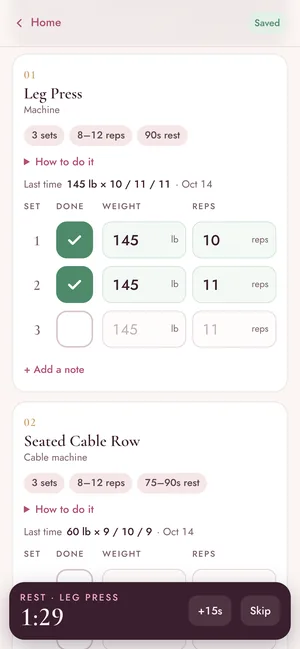
Strength training, three times a week
In a small randomized trial, postmenopausal women did 15 weeks of resistance training, three sessions a week. Among the women who kept it up (at least two sessions a week), MRI scans showed their visceral fat fell from 2.58 to 2.41 litres, and total abdominal fat fell too. Here is the part I love: their waist measurement barely changed. The fat was coming off the inside first, where the tape measure can’t see it.
Lifting also does the one thing cardio can’t: it rebuilds the muscle menopause takes, which keeps your resting metabolism from sliding further. Start with the five basic moves, or follow the free 12-week program.
Walk, every day you can
A review of 101 trials in postmenopausal women found aerobic exercise did the most for fat loss and waist size, resistance training did the most for muscle, and doing both gave the biggest drop in body-fat percentage. You don’t need a spin class. Walking counts. A 2025 analysis of 57 studies linked about 7,000 steps a day with lower risk of heart disease, dementia and early death than 2,000, and the CDC’s baseline is 150 minutes of moderate activity a week.
What about crunches?
Do them if you like them, but they won’t take fat off your stomach. Your body does not burn fat from the spot you exercise. Core work strengthens what’s underneath; lifting, walking and food decide what’s on top.
How to lose belly fat after menopause: the food side
- Protein first, at every meal. About 30 grams per meal, which is what adults over 50 need to keep building muscle. It also keeps you full on fewer calories. Breakfast is where most women fall short: toast, cereal or coffee on the way out the door lands well under 30 grams. The protein calculator gives you a daily number in a minute.
- A small deficit, not a crash diet. Eating far too little after menopause costs muscle, and muscle is the thing you’re trying to keep. The CDC’s guide is 1 to 2 pounds a week at most; for women over 50 protecting muscle, I aim for the lower end. The body recomposition guide explains how to lose fat and gain muscle at the same time.
- Watch the evening glass of wine. Not forever, not judgement. Alcohol adds calories and can break up your sleep. Try two weeks without it and see what changes.
- Sleep counts. Short, broken sleep pushes appetite up and recovery down. If night sweats are wrecking your sleep, that is worth raising with your doctor.
How should you measure belly fat loss?
Because you are gaining muscle while losing fat, the scale is the worst way to track a menopause belly. Use these instead:
- Your waist, measured at the belly button, once every two weeks, same time of day.
- One pair of jeans that are tight now. Try them on monthly.
- A photo, side-on, same spot, same light, every four weeks.
- Your lifts. If the weights are going up, the muscle is coming back, and the fat follows.
Does hormone therapy help with menopause belly fat?
Hormone therapy can help with hot flashes, sleep and bone, and some women find it makes everything else easier. Whether it is right for you is a conversation for your doctor. What the research above shows is that lifting, walking and protein work either way.
Common questions
Why do women get belly fat in menopause?
As estrogen falls, the body starts storing more fat around the organs in the abdomen instead of on the hips and thighs. At the same time, muscle slowly declines, the body burns a little less energy at rest, and most women move less. In the SWAN study the rate of fat gain doubled during the transition.
Can you get rid of menopause belly fat?
Yes. Visceral fat is the deep belly fat that responds best to exercise. In a 15-week trial, resistance training three times a week reduced it in postmenopausal women even though their waist measurement barely changed.
Do crunches get rid of belly fat?
No. Crunches strengthen the muscle underneath, but your body does not burn fat from the spot you exercise. Full-body strength training, walking and protein reduce belly fat; core work makes what is underneath stronger.
How long does it take to lose menopause belly fat?
Most women notice their clothes fitting differently in 8–12 weeks of consistent lifting, walking and protein. In the trial that measured it, visceral fat dropped within 15 weeks. The scale is the slowest signal, because you are gaining muscle while losing fat.