Coaching · online
Strength training for menopause
One-on-one strength and nutrition coaching for women in perimenopause, menopause and beyond, with Jill McCracken, ISSA-certified personal trainer. You get a plan built for your body and a real coach checking in with you every week, so you’re not figuring this out alone. Coached online, wherever you are.
Why strength matters most right now
If what used to work doesn’t anymore, you’re not imagining it. Two things speed up in this phase of life, and both respond to the same kind of training.
- Muscle. From around age 30, the body loses about 3–5% of its muscle mass per decade unless you train to keep it.
- Bone. A woman can lose up to 20% of her bone density in the five to seven years after menopause.
Estrogen was helping protect both. Lifting weights and eating enough protein replace some of that signal. In the LIFTMOR trial, postmenopausal women with low bone mass who built up to heavy, supervised lifting twice a week gained 2.9% in spine bone density over eight months, while the low-intensity group lost 1.2%.
Who this is for
- You’re in perimenopause, menopause or postmenopause, and your old routine has stopped working
- You’ve never lifted, or it’s been years
- You want to build muscle and bone, not just get smaller
- You’re done with restrictive diets
- You want a plan built around your body, your schedule and your joints
If you want to read before you reach out, start with strength training for women over 50 or, for the decade after, strength training for women over 60. Seeing it most at your waist? Menopause belly: what actually works, and how to lose fat and build muscle at the same time.
What coaching includes
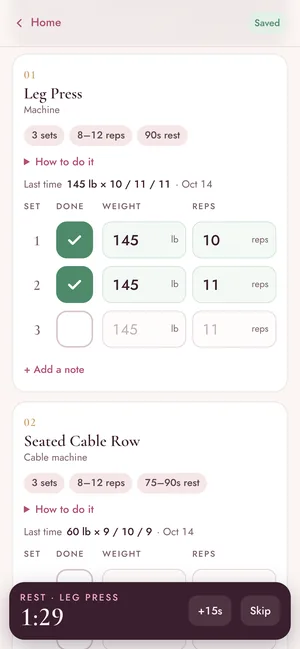
- A strength program built on the five core movements (squat, hinge, push, pull and carry), progressed week by week. See the five moves.
- Protein-first nutrition targets, about 1 gram of protein per pound of your goal weight, not restrictive diets. Higher protein during a calorie deficit helps you lose more fat and improves body composition. Find your number.
- Check-ins every week, at minimum, with the plan adjusted as you go, and messages in between when something comes up
- Video form feedback, so you know your technique is right
- Coaching that fits your week, wherever you train
How it works
- Send a short inquiryAbout five minutes: your goals, your starting point, and what’s gotten in the way.
- Free consult callWe talk it through. There’s no pressure to sign up.
- Your starting pointA detailed intake form, plus a look at your baseline strength.
- Your planTraining and protein targets built around you.
- Train and check inWeekly check-ins, form feedback, and the plan evolves as you get stronger.
Alongside your doctor, not instead
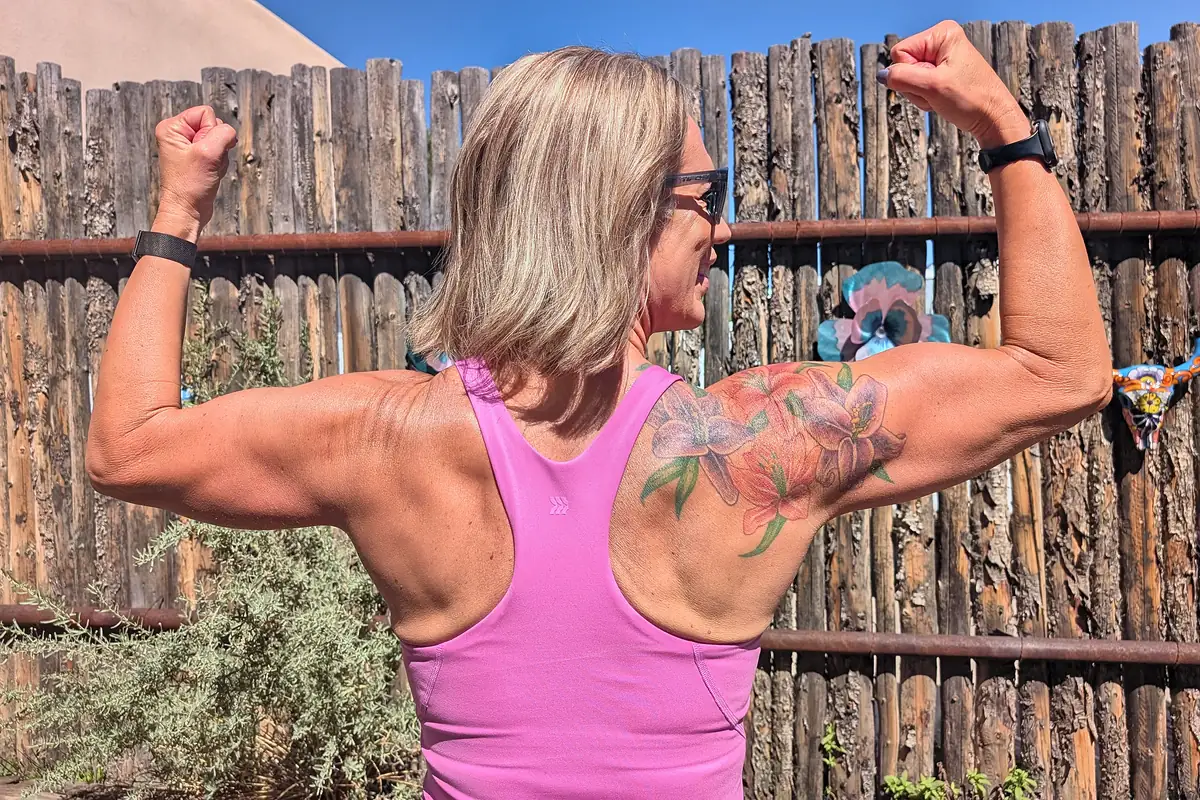
Jill went through this herself — the weight that would not move, the missed signs, and the strength training that finally changed things.
Jill is a strength coach, not a doctor or dietitian. Hormone therapy, bone density testing and medication decisions stay with your healthcare provider, and coaching works around whatever you decide together. If you have osteoporosis, a past fracture, or a health condition, the plan is adapted: people with fractures or a high fracture risk may need to avoid high-impact exercise and some forward-bending positions.
Common questions
Do I need to have lifted weights before?
No. Most clients start by learning five basic movements with light weights, then add load week by week. The first 30 days guide shows what that first month looks like.
Is lifting heavy safe after menopause?
For most healthy women, yes, when technique comes first and the weight goes up gradually. The National Strength and Conditioning Association’s position is that a properly designed program with good instruction is safe for healthy older adults. In the LIFTMOR trial, postmenopausal women with low bone mass built up to heavy lifts under supervision and improved their spine bone density. Still in perimenopause? The perimenopause guide covers how to train through the transition.
What if I have osteoporosis or a past fracture?
Strength training is usually still on the table, but the plan changes. Some high-impact and forward-bending moves may be swapped out. Check with your doctor first, and tell Jill on your inquiry so the program starts in the right place.
Do you coach online?
Yes — online is how coaching works. You get a program built for your setup, protein targets and weekly check-ins, with video form feedback so you know your technique is right, wherever you live.
Is the consult call really free?
Yes. It’s a no-pressure conversation about your goals, your training history and what’s gotten in the way. There’s no obligation to sign up.