Strength basics
Is it safe to lift heavy after 50?
Short answer: for most healthy women, yes, when the technique is sound and the weight goes up gradually. Here’s what “heavy” actually means and how to get there safely.
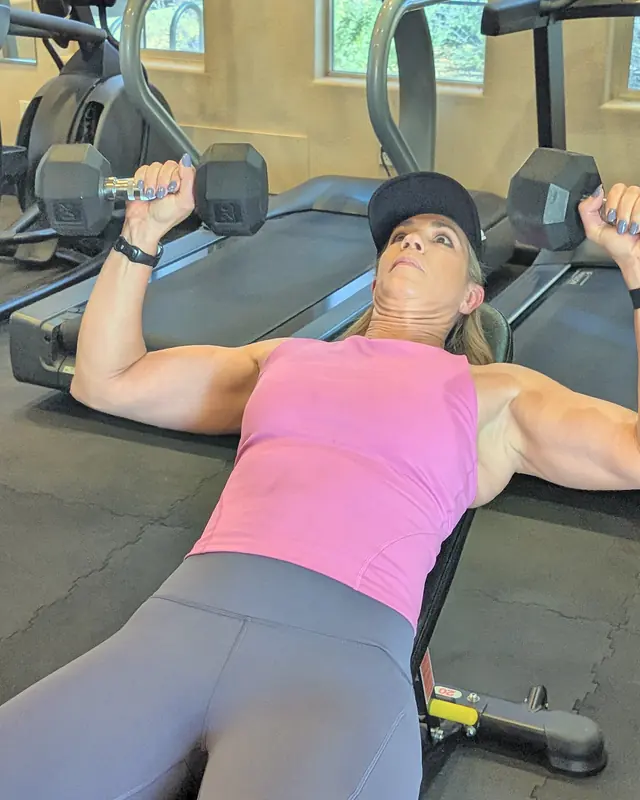
Is it safe for women over 50 to lift heavy?
The National Strength and Conditioning Association’s position statement on older adults is direct: “A properly designed resistance training program with appropriate instructions for exercise technique and proper spotting is safe for healthy, older adults.” It adds that programs can be adapted for people with frailty, mobility limits or chronic conditions.
What counts as heavy lifting after 50?
Heavy doesn’t mean straining at your absolute limit. The NSCA recommends two to three sets of multi-joint exercises at 70–85% of your one-rep max, two to three times a week. Practically, that’s a weight you can lift with good form for about six to twelve reps, where the last two feel genuinely hard.
Are light weights enough after 50?
From around age 30, the body loses about 3–5% of its muscle mass per decade unless you train to keep it. Muscle and bone adapt to the demand you put on them. Weights you could lift all day don’t ask them to adapt.
Can you lift heavy with low bone density?
In the LIFTMOR trial, postmenopausal women with low bone mass, average age 65, trained at more than 85% of their one-rep max twice a week for eight months, under supervision. Their spine and hip bone density fared better than the low-intensity group’s, their physical function improved on every measure, and there was only one minor adverse event. The bone health guide has the full numbers.
How do you build up to heavy weights safely?
- Learn the movement light first. Form comes before load.
- Add weight in small steps, when the last two reps of a set stop being hard.
- Train two to three times a week and take rest days on purpose. The CDC recommends muscle-strengthening activity at least two days a week.
- Get eyes on your technique. The NSCA notes that supervision may be important for getting the best results in muscle, strength and balance.
For the full picture of what drives muscle growth at this age, and what stalls it, read building muscle after 50.
When should you check with your doctor before lifting heavy?
Talk to your doctor before you start if you have a heart condition or high blood pressure, get chest pain or dizziness, have had recent surgery or an injury, are pregnant, or have osteoporosis or a past fracture. None of these automatically rules strength training out, but your plan may need to be adjusted.