Start here
Your first 30 days of lifting after 40, week by week
If you’ve never lifted, or it’s been years, your first month isn’t about transformation. It’s about learning five movements and building a habit you’ll still have next year.
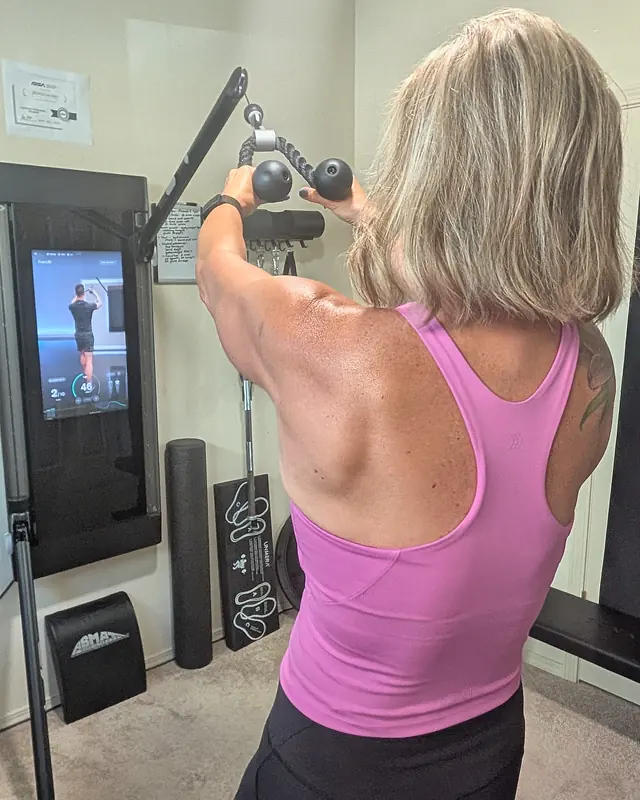
Why bother starting now? From around age 30, the body loses about 3–5% of its muscle mass per decade unless you train to keep it. Lifting is how you keep it. All you need is a gym or a set of adjustable dumbbells and about 30 minutes, three times a week.
Nervous about the gym itself? How to start when the gym feels intimidating covers starting at home, going when it’s quiet, and walking in with a plan.
Week 1: Learn the moves
Squat, hinge, push, pull, carry. Three sessions, 30 minutes each, light weight. You’re teaching your body the patterns, not chasing soreness. If you’re sore for days, you did too much.
Week 2: Add weight, not days
Same three sessions, same five moves, just heavier. If the last two reps of a set still feel easy, the weight is too light. Resist the urge to add a fourth day. More weight on the same plan is what makes you stronger.
Week 3: Fix breakfast
Put about 30 grams of protein in your first meal. It steadies your appetite through the day and gives the muscle you’re building something to grow on. Stanford Lifestyle Medicine recommends about 30 grams per meal for adults over 50. The protein guide has easy ways to get there.
If fat loss is part of the goal, body recomposition explains how to lose fat without losing the muscle you’re building.
Week 4: Test, don’t guess
Retake your measurements. Reload the weight you used in week one and lift it again. It should feel noticeably easier. Progress you can measure beats progress you hope for, and seeing it is what keeps you going.
Day 31: Keep going
Thirty days won’t transform your body. It builds the habit that does. Plenty of people quit right before the part that works, so the goal of month one is simply to get to month two.
If you’re over 50, the next step is a full week with cardio and balance work placed around the lifting: workouts for women over 50.
New to exercise, or managing a health condition or injury? Check with your doctor before you start. Stop any movement that causes sharp pain.