Nutrition
Menopause diet plan: what to eat in perimenopause and after
You’ve probably seen menopause diet plans promising to melt belly fat in five days. This isn’t one of them. It’s a practical way of eating for perimenopause and beyond, built on what research supports: protein at every meal, plenty of fiber, enough calcium, and a Mediterranean-style pattern, with a sample day you can copy.
What should women over 40 eat in a day?
Forget counting every bite. Build each meal the same way and most of the work is done:
- A palm or two of protein, about 30 grams: chicken, fish, eggs, Greek yogurt, cottage cheese, tofu, lean beef or beans with something extra.
- Half the plate vegetables or fruit, a mix of colors.
- A fist of slow carbs: whole grains, potatoes, beans, lentils or fruit. More on training days if you’re hungry.
- A thumb or two of fat: olive oil, nuts, seeds, avocado, cheese.
Three meals like that, plus a protein snack if you need one, covers the basics for most women. Portions depend on your size, activity and goals, so treat these as a starting point rather than a prescription.
Why protein comes first
As you get older, muscle becomes less responsive to protein, so it needs more at each meal to respond the same way. Stanford Lifestyle Medicine suggests about 30 to 35 grams per meal for adults over 50, and about 0.54 to 0.72 grams per pound of body weight a day as a baseline. Most women land well short at breakfast. Protein also keeps you full, which helps if you’re trying to eat a little less.
Fiber: the gap almost everyone has
Fiber feeds your gut, keeps you regular and helps you feel full. Most of us fall far short: one review estimated that only about 5% of Americans eat the recommended amount. You don’t need to track grams. Add one high-fiber food to each meal: berries on yogurt, beans or lentils in a salad or soup, a whole-grain side, an extra vegetable at dinner. Increase it gradually and drink water as you go, or your gut will complain.
Calcium and vitamin D for your bones
Bone loss speeds up after menopause, and food is the first line of support. The Institute of Medicine’s recommended intake of calcium rises from 1,000 milligrams a day for women aged 19 to 50 to 1,200 milligrams from 51. Vitamin D is 600 IU a day up to age 70 and 800 IU after. Yogurt, milk, cheese, fortified plant milks, canned salmon or sardines with the bones, tofu made with calcium and leafy greens all help. Ask your doctor before adding supplements, especially if you take other medications. Food is only half of it: strength training for bone health covers the exercise that loads bone.
Is the Mediterranean diet good for menopause?
It’s the eating pattern with the most going for it at this stage, with a few honest caveats:
- Hot flashes. In a study that followed more than 6,000 Australian women for nine years, those who ate the most Mediterranean-style food had about 20% lower odds of hot flashes and night sweats, and a high-fat, high-sugar diet went with higher odds. A smaller study of postmenopausal women found those with worse symptoms followed a Mediterranean diet less closely. These studies show links, not cause.
- Weight. In the Women’s Health Initiative, women who lost at least 10% of their weight on a healthier diet were more likely to stop having hot flashes. The Menopause Society recommends weight loss for hot flashes but doesn’t recommend specific diet changes or soy for them, because the evidence is limited.
- Heart. The strongest evidence is for your heart. In a large trial of more than 7,000 older adults at high risk, a Mediterranean diet with extra olive oil or nuts led to about 30% fewer heart attacks, strokes and heart-related deaths than a reduced-fat diet.
So eat this way for your heart, your muscle and your waistline, and treat any effect on hot flashes as a possible bonus. Want to see a full week? The Mediterranean sample meal prep week has one Sunday prep and five days of high-protein Mediterranean meals, with recipes.
A sample menopause diet plan for one day
| Meal | What to eat |
|---|---|
| Breakfast | Greek yogurt with oats, berries and a spoon of nuts, or a two-egg omelet with spinach and whole-grain toast |
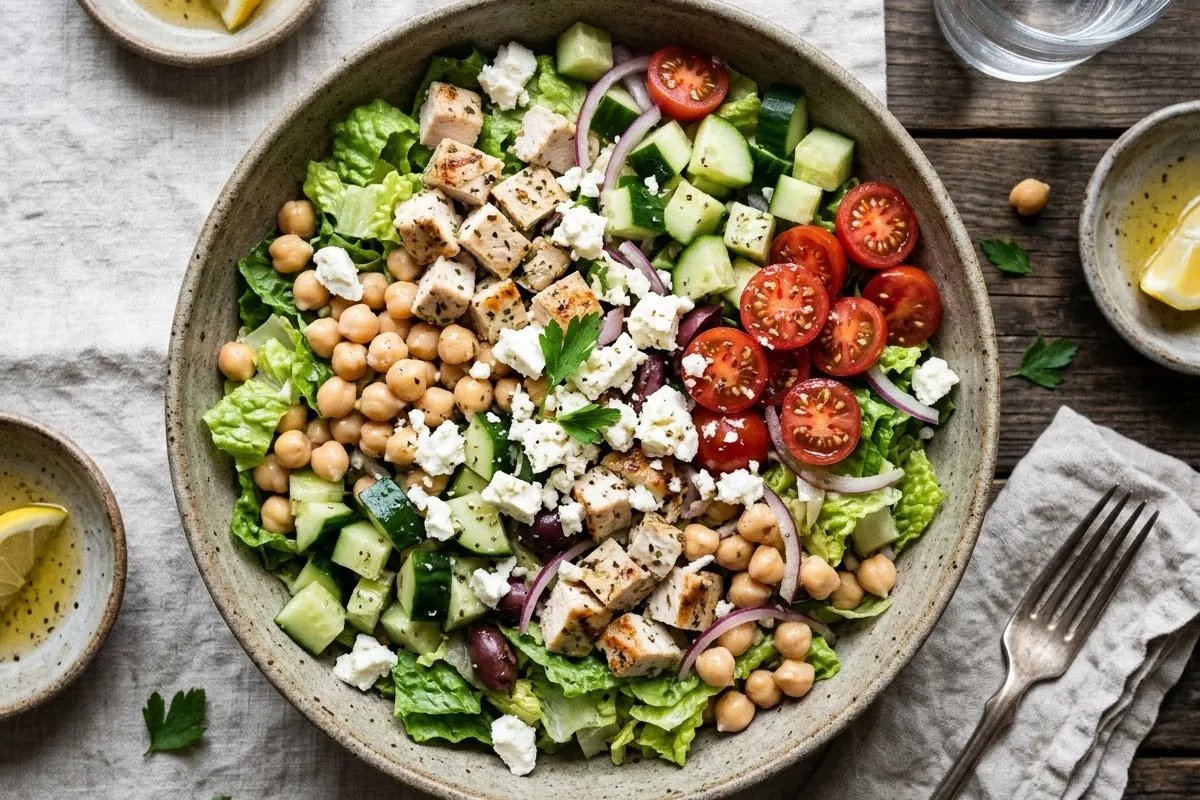
| Lunch | Chopped Greek salad with chicken, chickpeas, cucumber, tomatoes, feta and olive oil |
| Snack (optional) | Cottage cheese with fruit, or hummus with vegetables and a cheese stick |
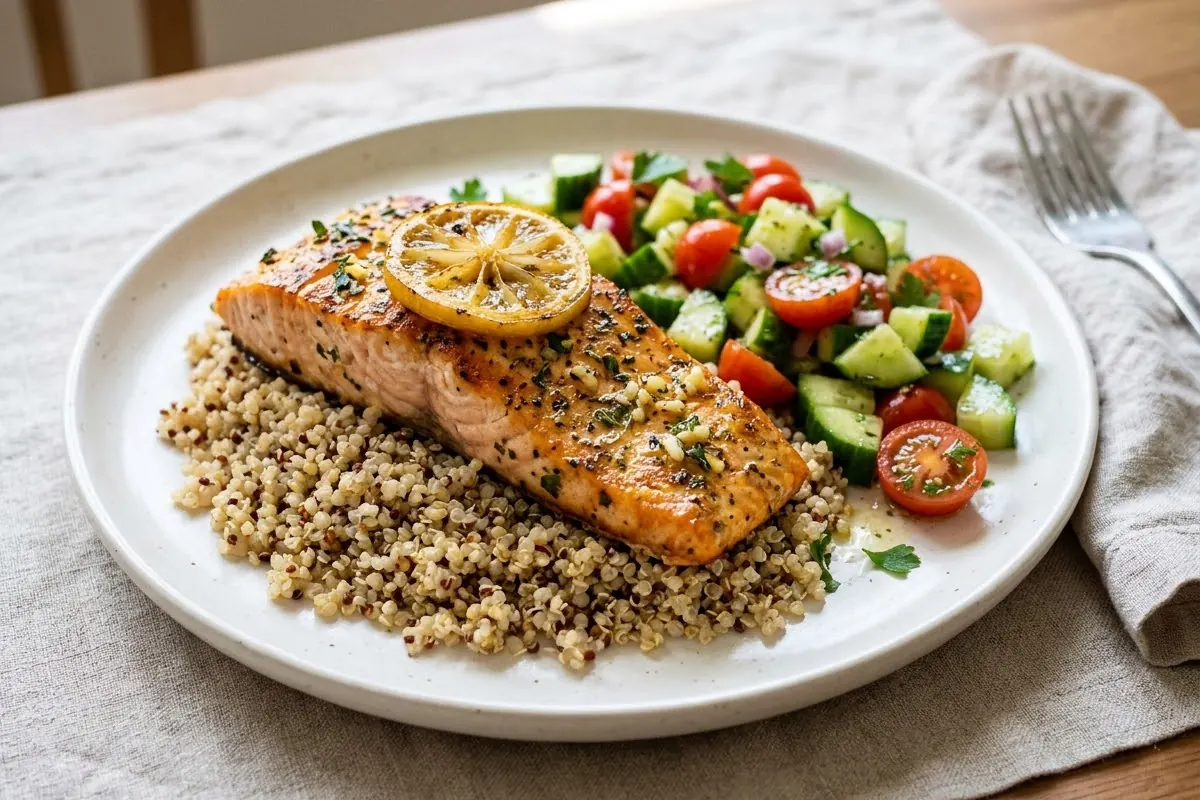
| Dinner | Lemon herb salmon with quinoa and roasted vegetables |
| Drinks | Water, coffee or tea before early afternoon, and milk or a fortified plant milk if you need more calcium |
Want it on paper? The free Protein-First After 40 Starter Guide (PDF) has the protein-first plate, seven days of meal ideas, a swap sheet and a grocery list.
What foods should you limit?
Nothing is banned, but a few things are worth cutting back. Alcohol is the big one for many women: research on healthy volunteers found it disrupts sleep in the second half of the night at every dose, and sleep is already fragile in menopause. Sweet drinks, pastries and highly processed snacks crowd out the protein and fiber you need, and a high-fat, high-sugar pattern was linked with more hot flashes in the Australian study. Try two weeks of fewer evening drinks and see how you sleep.
If you’d like meals planned around your protein target and your preferences, with a coach checking in every week, that’s what Jill’s online coaching does. Request your free consult to talk it through, or see ten high-protein breakfasts to start tomorrow.
This guide is general nutrition education. If you have diabetes, kidney disease, high cholesterol or another condition, ask your doctor or a registered dietitian how it applies to you.
Common questions
What is the best diet for menopause?
There is no single menopause diet, but the best-supported pattern is Mediterranean-style eating built around protein at every meal: fish, poultry, eggs, yogurt, beans, vegetables, fruit, whole grains, nuts and olive oil. It is linked with fewer hot flashes in observational research and with fewer heart attacks and strokes in a large trial.
What should women over 40 eat in a day?
Three meals built the same way: about 30 grams of protein, half the plate vegetables or fruit, a fist-sized portion of whole grains, potatoes or beans, and some olive oil, nuts or avocado. Add calcium-rich foods like yogurt, milk or fortified alternatives. Snacks are optional and work best with protein.
Is the Mediterranean diet good for menopause?
It is a good fit. In a nine-year study of Australian women, those who ate the most Mediterranean-style food had about 20% lower odds of hot flashes and night sweats, though that kind of study cannot prove cause. In a large trial of older adults, a Mediterranean diet with olive oil or nuts cut major heart events by about 30%.
What foods should I avoid during menopause?
No food is off limits, but a few are worth cutting back. A diet high in fat and sugar was linked with more hot flashes in one long study, and alcohol disrupts the second half of the night’s sleep. Highly processed snacks and sweet drinks also make it harder to fit in protein and fiber.