Nutrition
Strength training on a GLP-1: how to keep muscle while you lose weight
If you’re taking a GLP-1 medicine like Ozempic, Wegovy, Mounjaro or Zepbound, the scale is probably moving. The question is what you’re losing. This guide covers why some of it can be muscle, what the research shows about lifting and protein on these medicines, and how to keep your strength while the weight comes off.
Do GLP-1 medicines cause muscle loss?
Whenever you lose weight, part of it is lean tissue, not just fat. That’s true of dieting, and it’s true of these medicines. In the main semaglutide trial, STEP 1, about 38% of the weight people lost was lean mass, according to a 2025 joint advisory from four obesity and nutrition societies. In the tirzepatide trial SURMOUNT-1, body scans showed about 75% of the weight lost was fat and 25% lean, the same split as in the placebo group.
Two honest caveats. First, “lean mass” isn’t all muscle; it also includes water, organs and bone, and a review of these medicines found the share varies a lot from study to study. Second, this happens with weight loss in general, not only with these drugs. The point isn’t that the medicine is bad. It’s that losing weight fast makes protecting muscle more important.
Why does muscle matter more after 40?
From around 30, the body loses about 3–5% of its muscle per decade. A review in Diabetes Care estimated that the lean mass lost on these medicines, about 10%, is “comparable to a decade or more of aging.” If you’re 55 and already losing muscle every year, that’s a decade you don’t want to skip ahead.
Muscle is what gets you up the stairs, carries the groceries and keeps you steady on your feet. A review of GLP-1 treatment in menopause notes that few trials have measured strength or physical function as a main outcome, so keeping an eye on your own strength is worth doing.
What does strength training do on a GLP-1?
The clearest answer comes from a 2026 randomized trial of 120 adults on tirzepatide. Half did resistance training three times a week for 40 weeks; half kept to their usual activity. Both groups lost about the same weight, roughly 50 pounds. But the training group lost about 2.4 pounds less lean tissue, and their strength went up, while the usual-activity group’s bench press went down.
That matches what’s known about dieting without the medicine. In older adults losing weight on a diet, resistance training prevented most of the muscle loss the diet caused, and in a trial of adults over 65, those who lifted lost much less lean mass and hip bone than those who only did aerobic exercise. The 2025 advisory recommends strength training at least three times a week alongside these medicines, plus regular aerobic activity, and notes that aerobic activity alone does less to protect muscle.
A simple strength plan while you’re losing weight
You don’t need a complicated program. Three full-body sessions a week, 30 to 45 minutes, built on five movements:
| Movement | Start with | Sets × reps |
|---|---|---|
| Squat | Goblet squat to a chair | 2–3 × 8–12 |
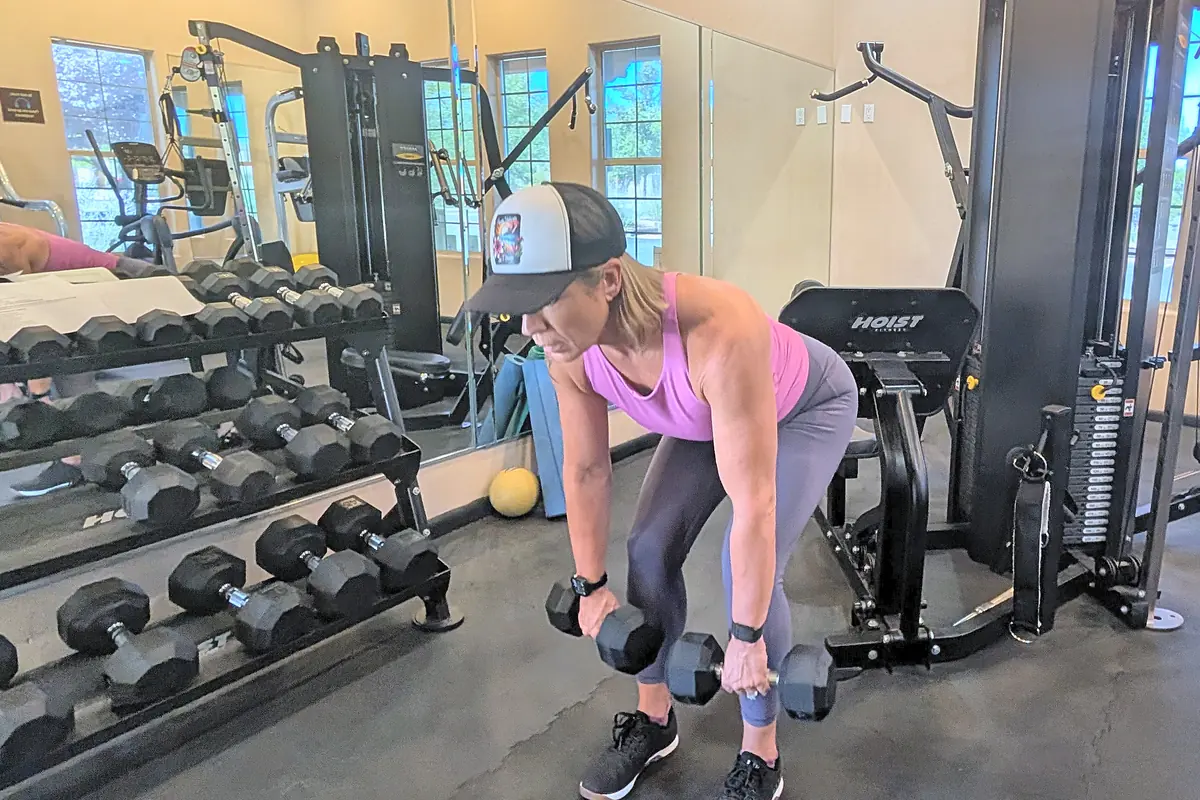
| Hinge | Dumbbell Romanian deadlift | 2–3 × 10 |
| Push | Incline push-up or dumbbell press | 2–3 × 8–12 |
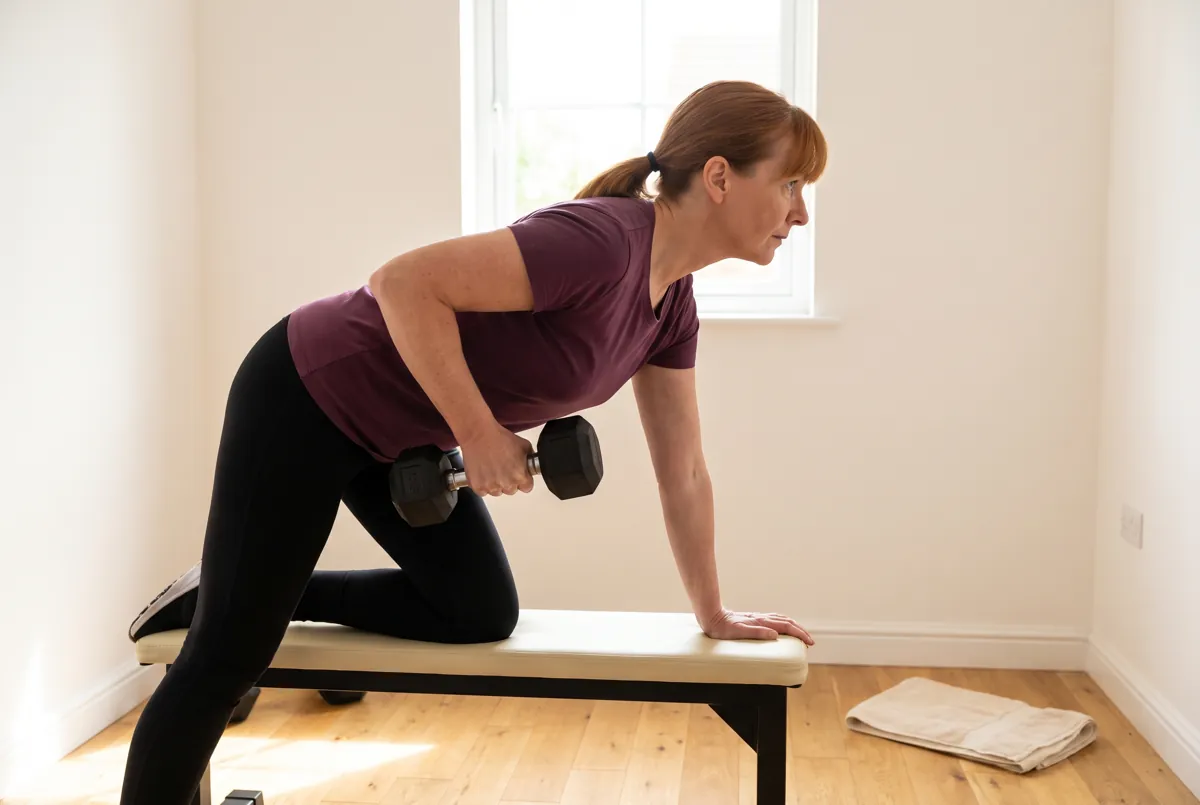
| Pull | One-arm dumbbell row | 2–3 × 10 each side |
| Carry | Farmer’s carry | 2–3 × 30 seconds |
Pick a weight that makes the last two reps of each set hard, and add a little when every set feels easy. Your goal is for your lifts to go up, or at least hold steady, the whole time the scale is going down. That’s the sign the weight you’re losing is mostly fat.
How much protein on a GLP-1?
These medicines turn your appetite down, which is the point, but it makes it easy to eat too little protein without noticing. The 2025 advisory notes that targets of about 0.55 to 0.73 grams per pound of body weight a day, or 80 to 120 grams a day, have been proposed during active weight loss, and it’s clear that protein alone won’t protect muscle without exercise. In 20 trials of adults over 50, those eating more protein while losing weight kept more lean mass and lost more fat.
- Protein first. When you can only manage a few bites, make them the chicken, fish, eggs, yogurt or tofu.
- Spread it out. Several smaller protein portions through the day are easier than one big one.
- Use easy options. Cottage cheese, Greek yogurt, protein shakes and milk are easy to get down when food doesn’t appeal.
The protein calculator gives you a daily number and a sample day of meals, and how much protein women over 40 need explains the reasoning. If you have kidney disease or another condition that affects protein, ask your doctor or a dietitian for your number.
What about your bones?
Fast weight loss can take bone with it, and the 2025 advisory notes that older people and women tend to lose more. In a one-year trial of people who had just lost weight, bone density at the hip and spine held steady in those who took a GLP-1 medicine and exercised, but fell more in those who took the medicine without exercise. Lifting loads bone as well as muscle, which is one more reason to keep it in the plan. Strength training for bone health after menopause covers which exercises matter most.
What this guide doesn’t cover
Jill is a strength and nutrition coach, not a doctor, so this guide says nothing about whether to take a GLP-1 medicine, which one, the dose, or when to stop. Those decisions belong to you and your prescriber. What a coach can do is help with the parts that are yours either way: the training, the protein, and keeping your strength going up while your weight comes down.
If you’re on a GLP-1 and want a strength plan written for your body, meals built around a protein target that works with a smaller appetite, and someone checking in with you every week, that’s what Jill’s online coaching does, alongside your prescriber’s care. Request your free consult to talk it through, or start with building muscle after 50.
Common questions
Do GLP-1 medications cause muscle loss?
Some of the weight lost on any diet is lean tissue, and GLP-1 medicines are no exception. In the semaglutide trial STEP 1, about 38% of the weight lost was lean mass; in the tirzepatide trial SURMOUNT-1 it was about 25%. Lean mass includes water and organs as well as muscle, but strength training and enough protein help you keep more of the muscle.
How much protein should I eat on a GLP-1?
A 2025 joint advisory from four obesity and nutrition societies notes that targets of about 0.55 to 0.73 grams per pound of body weight a day, or 80 to 120 grams a day, have been proposed during weight loss. With a smaller appetite, put protein first at each meal. Ask your prescriber or a dietitian for a number that fits your health.
How do I keep muscle while losing weight on a GLP-1?
Lift weights two or three times a week, eat protein at every meal, and keep walking. In a randomized trial of adults on tirzepatide, those who did resistance training three times a week lost the same weight but less lean tissue, and got stronger instead of weaker. Your prescriber manages the medicine; the training and protein are yours.
Can I lift weights while taking Ozempic or Zepbound?
For most people, yes, and the 2025 nutrition advisory recommends strength training at least three times a week alongside these medicines. If you are eating very little, feel dizzy or unwell, or have other health conditions, check with your prescriber before you start, and build up gradually.